headerCallIcon
Logo Front
Logo Back
Logo Front
Logo Back
Gynoveda Clinic Near Me

Gynoveda Clinical Research

Gynoveda's Ayurvedic protocols are backed by published peer-reviewed clinical studies. Below are the studies that inform our treatment protocols - along with journal citations, study design, and outcome data. All studies involving Gynoveda formulations include named investigators and institutional affiliations.

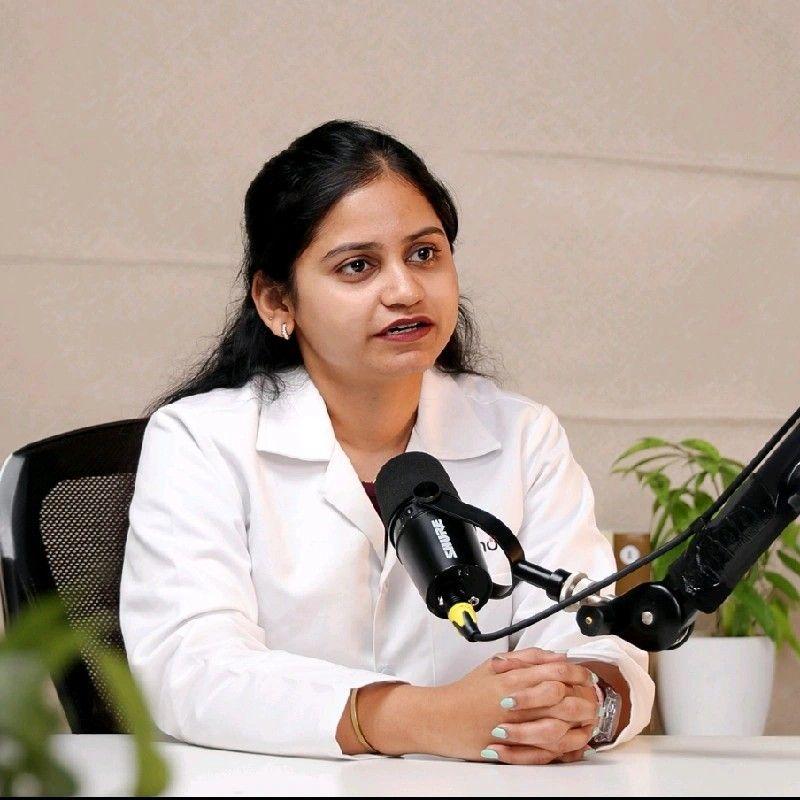
Dr. Aarati Patil

Maintained by:

Dr. Aarati Patil

Co-Founder & Chief Ayurvedic Physician, MS, MD Ayurveda

Last updated: May 21, 2026

Our Published Clinical Studies

Discover the clinical trials and observational studies conducted by Gynoveda. Every study is reviewed by our medical advisory board for clinical relevance and safety. No adverse drug reactions were reported in the Gynoveda studies listed below.

GYNOVEDA INTERNAL STUDY

PCOS Cyst Resolution Study

European Journal of Pharmaceutical and Medical Research (EJPMR) · 2022

Prospective Interventional · N=190
  • 76% cyst resolution on USG
  • 72% menstrual cycle regularization
  • 100% flow normalization

    *All participants reported normalization of menstrual flow volume to within normal clinical range by end of the study period.

  • 0 adverse drug reactions
GYNOVEDA CLINICAL TRIAL

Natural Ovulation & Fertility Study

EJPMR · 2023

Retrospective open-label clinical study · N=149
  • 85.23% on-time natural ovulation
  • 79.7% participants with irregular cycles reported cycle normalization.
  • 0 adverse drug reactions
GYNOVEDA INTERNAL STUDY

Irregular Menstrual Cycle Regularization Study

Annals of Phytomedicine, Ukaaz Publications · 2022

Prospective Interventional · N=180
  • 72% menstrual regularization
  • 80% flow normalization

    *All participants reported normalization of menstrual flow volume to within normal clinical range by end of the study period.

  • 0 adverse events

Third-Party Evidence

Independent peer-reviewed research on key herbs and formulations used in Gynoveda protocols. All studies sourced from indexed medical journals.

Ashwagandha (KSM-66)

RCT

Significant improvement in sperm count, motility, and morphology in subfertile men. Included for couples — evidence supporting male fertility component of Ayurvedic treatment protocol.

Fertility and Sterility · 2010View →

Shatavari (A. racemosus)

Observational

Galactogenic effects and hormonal modulation; supports FSH secretion in women with diminished ovarian reserve

Journal of Ethnopharmacology · 2014View →

Guduchi (T. cordifolia)

RCT

Immunomodulatory and anti-inflammatory effects; reduced IL-6 and TNF-a in endometriosis patients

BMC Complementary Medicine · 2017View →

Siriwardene et al.

Clinical study · N=40

75% naturally conceived and 85% were reported cured of PCOS after treatment, N=40

AYU · 2010View →

Kanchanar Guggulu

Observational

Fibroid resolution on USG in 7 weeks, N=7

AYU · 2014View →

Lodhra (pre-clinical)

Pre-clinical

Pre-clinical evidence suggests possible effects on reproductive hormones; not human fertility outcome evidence.

J Ethnopharmacol · 2004View →

PCOS prevalence meta-analysis

Observational

10-22.5% Indian women, Bharali et al.

Cureus · 2022View →

Our Medical Team

All clinical content on this page is authored and reviewed by qualified Ayurvedic practitioners with active research backgrounds.